Reinfection occurs when an HIV-positive person becomes infected with a second strain of HIV. This is sometimes called a superinfection . Although this risk is low, it could compromise antiretroviral therapy (ART) if the second infection is resistant to HIV drugs. It is not clear how often reinfection occurs, but it is helpful to consider the two issues separately . Youai Self-Test,,, HIV infection probability self-test Mini Programs One is the risk of multiple different infections. All HIV-positive people already have multiple HIV types in their bodies, and because HIV makes mistakes when replicating, the longer the infection is and the more mutations there are, but these differences are small. Most studies believe that the risk of reinfection is similar to that of initial HIV infection, and viral load is probably the most important factor, with the risk greatest when the viral load is very high. The second is the risk that one of these strains has resistance to a different drug. This is rarer but depends on the rate of drug resistance in the country. For example, in some countries, 10% (1 in 10) of people infected have drug resistance. The main risk of drug resistance is that it may make ART ineffective. Initially, reinfection was thought to be a risk only in the early stages of infection, but cases have also occurred during chronic infection, including reinfection of people on ART with drug-resistant HIV. Drug-resistant HIV may also reduce the effectiveness of preventive medications (PrEP and PEP). If two people are likely to have been infected with the same HIV strain, there is no risk…

Hulu’s new sitcom, comprising 10 episodes and created by the team behind Will & Grace, naturally piqued my interest. After hearing strong praise, I watched the entire series in a single sitting. Set in Palm Springs, the show centers on three middle-aged gay men who find themselves sharing a home following an unexpected death. As they live together, the trio confronts themes of aging, grief, love, and long-buried secrets. While the series embraces certain LGBTQ+ stereotypes, it does so with humor and a distinctive flair. Nonetheless, despite the hype and positive reviews, I found the show to be only moderately entertaining, eliciting genuine laughter just a few times. Overall, it felt like a typical sitcom experience. Perhaps this response was influenced by my state of mind or expectations, but I did not find it particularly humorous. More reflections on that to follow. The narrative begins with Bunny, Arthur, and Jerry reuniting at the funeral of a mutual friend—who also happened to be Jerry’s former lover. They gather afterward at Bunny’s expansive Palm Springs mansion, where Bunny lives with his mother, Sybil. Soon, Bunny offers for the two friends to move in. Bunny, the affluent founder of the lingerie brand Bunny Hutch, has filled his stylish Californian home with mid-century modern décor. Despite his wealth, he is lonely and single, caught in a codependent relationship with his mother and hindered by his own insecurities. Arthur, a former Vogue fashion editor, is a sharp-tongued, impeccably dressed individual struggling financially in New York City. Jerry embodies the classic “himbo” archetype—handsome but less intellectually…
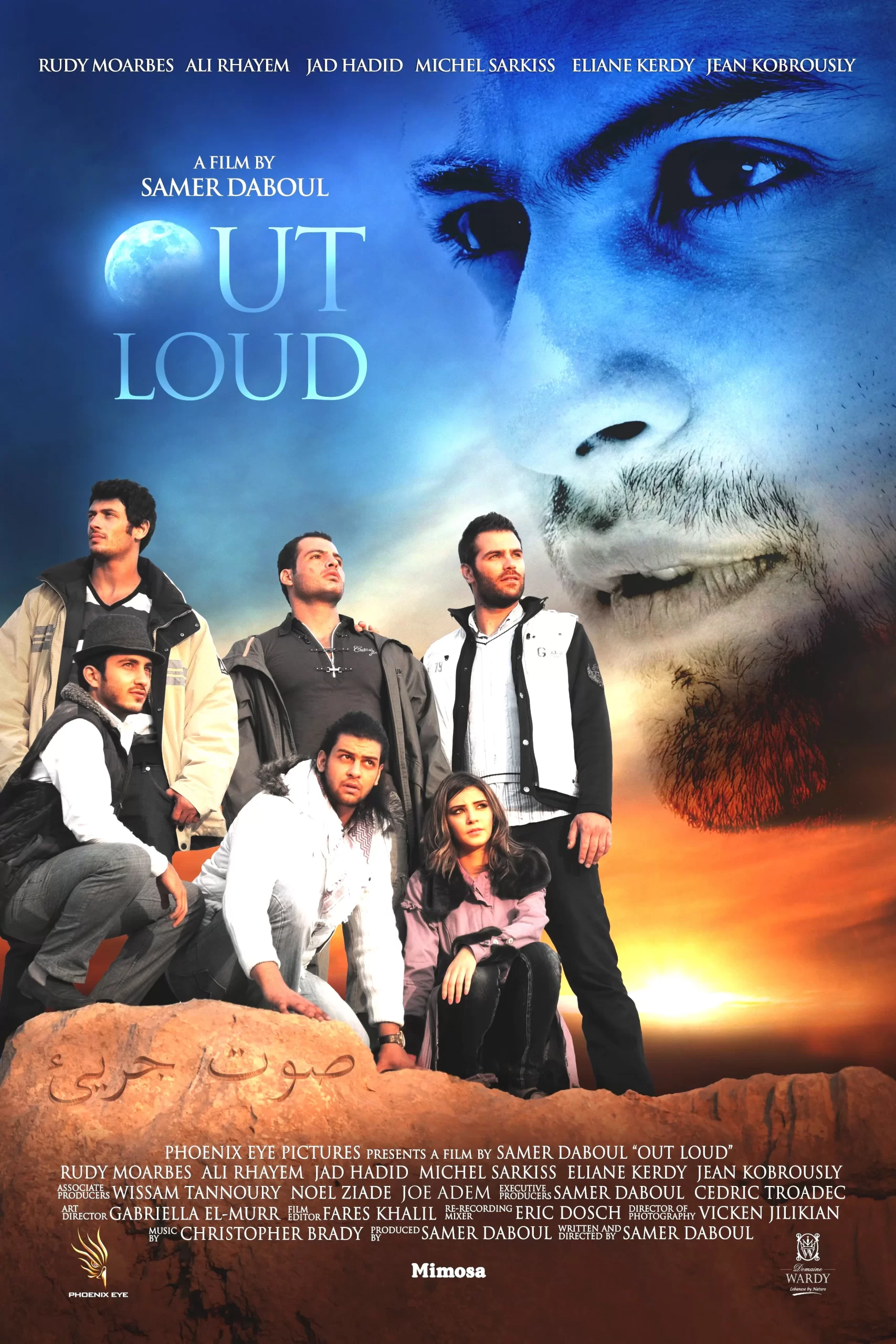
Set in post-war Lebanon, this 2011 film follows a gay man, his partner, and a diverse group of friends as they navigate the complexities of blending traditional and modern values. While it is often cited as Lebanon's first gay film, this label might be somewhat of a stretch. However, two of the six main characters are a gay couple, and their struggles within society play a central role in the narrative. Interestingly, the filming faced significant opposition from conservative elements in the community, with threats and violence occurring regularly. The project was only completed with military intervention, and post-production had to be done in the United States. The story introduces four friends: Jason, still reeling from the loss of his parents in a car bombing; Louis, heartbroken over a recent breakup; Elvis, a musician working for his drug-dealing father; and Rami, whose family has recently discovered his homosexuality. Jason hosts a party, inviting his online girlfriend Natalie, who quickly becomes part of the group. Rami's boyfriend, Ziad, arrives injured after being attacked by his cousins, forcing the group to confront the harsh realities of their environment. The six decide to flee the city and establish a commune in the woods, primarily to protect Ziad and Rami's relationship. Natalie marries the three straight members of the group, allowing the gay couple to find some relief. However, Ziad's family continues to pursue them, as their homosexuality has brought shame to the family. The group's unconventional bond leads to tragedy but also transforms their lives and the lives of those around them. The…

This series turned out to be a delightful surprise, skillfully blending elements of legal drama with lighthearted humor, romantic tension, and a touch of mischief. The chemistry between the lead actors is palpable, and their dynamic complements the narrative beautifully. One of the leads is especially striking, bringing a charismatic screen presence that enhances the emotional depth of the storyline. Their relationship begins with playful banter and flirtatious exchanges, gradually evolving into a heartwarming romance filled with tender moments and genuine affection. At just 12 episodes of approximately 20 minutes each, the series is an engaging and worthwhile watch. Shiba, a highly accomplished lawyer, quickly rises to become the youngest partner at his firm due to his relentless work ethic. However, his arrogance and singular focus on work make him a difficult colleague—evidenced by the fact that 99 assistants have already come and gone. While his boss admires his talent, he grows increasingly concerned about Shiba’s inability to collaborate effectively. Shiba’s closest friend at the firm is a fellow lawyer who, despite having a different approach to work, shares a deep mutual respect with him. The plot takes a compelling turn when Shiba accidentally injures a bar patron named Haruto. Driven by guilt, he checks on Haruto's well-being, only to be unexpectedly captivated by the stranger's serene demeanor and warm smile. Their paths cross again during a camping trip, where Haruto’s bold flirtation and sudden presence catch Shiba off guard. Though unaccustomed to romantic advances, Shiba finds himself irresistibly drawn to Haruto, a man whose past remains largely unknown. Eventually,…

I was initially unsure about the plot of this film, but I ended up really enjoying it. This Brazilian drama explores the complex and often painful dynamics of the relationship between two men, set within a world of survival on the streets of São Paulo. The film’s gritty yet tender portrayal of a gay teenager’s struggle to survive deserves recognition for its sensitive handling of themes like queer love, friendship, and resilience. The relationship between the 18-year-old protagonist, Wellington, and his 42-year-old mentor-turned-lover, Ronaldo, is raw and deeply moving, and this film is truly one that should be seen by all. After spending two years in a juvenile detention center, Wellington, now 18, returns home only to discover that his alcoholic father, a police officer, has left the city with his mother. Without a place to go and in search of his mother, Wellington finds himself spending time with his queer friends at an adult cinema. There, he meets Ronaldo, a 42-year-old escort who becomes both a mentor and a lover. Ronaldo, initially guiding Wellington as a father figure, soon introduces him to the world of sex work, teaching him the ropes while offering both emotional and physical intimacy. When Ronaldo gives him the nickname "Baby," it marks a turning point for Wellington, as he begins to fully immerse himself in Ronaldo's world. This world includes moments of joy, such as meeting Priscila, Ronaldo’s partner, and facing darker moments, like dangerous interactions with drug dealers like Torres, who develops a troubling interest in Wellington. As Wellington’s relationship with Ronaldo deepens,…

Director: Marco Berger Writer: Marco Berger Country: Argentina, Spain Genre: Comedy, Drama, Romance Language: Spanish Duration: 116 min Stars: Agustín Frías, Ailín Salas, Camila del Campo, Iván Masliah, Javier Orán, Lautaro Bettoni, Melina Furgiuela, Mora Arenillas “When your childhood best friend lies next to you in bed… and you know you love him — and know he might never understand how.” This isn’t a line from The Astronaut Lovers, the latest film by Argentine filmmaker Marco Berger. Rather, it’s the lingering feeling the film leaves behind — quiet, poignant, and difficult to name. On the surface, the storyline is straightforward. Pedro, a reserved young man, returns to Argentina from Spain to spend the summer at his family's seaside home. There, he reconnects with Maxi, a friend from his youth. But as the temperature rises, so do long-buried emotions, prompting that familiar, unspoken question: “What if…?” Pedro – Emotion in Silence Pedro is not one to speak loudly or often. He moves through the narrative gently, like a whisper — always present, quietly observing, carrying a storm of emotions just beneath the surface. He understands his own feelings, but he remains unsure whether he’s allowed to voice them. His silence is not a void but a muted intensity. Each pause, each fleeting glance, reveals more than words ever could. The audience is drawn in as silent witnesses to his internal world. Maxi – Conflicted and Charismatic Maxi serves as the emotional anchor of the film. He’s charismatic, light-hearted, and outwardly straight — yet his lingering looks and charged interactions suggest deeper complexity. His playful language often conceals emotional depth. When he casually asks, “Would it bother you…

Checkered Shirt is an endearing Korean mini-series that delicately explores the innocence and complexities of young love. The series consists of 8 episodes, each lasting around 8-10 minutes, making it easy to watch in one sitting. Unfortunately, the conclusion of the show feels abrupt, leaving numerous unresolved plot points. It seems as though the production team may have run out of resources, or there could have been more planned for the storyline. Regardless, if a second season is in the works, this is not how one would expect the first season to end if they aim to retain their audience. The plot itself is simple and straightforward. Jeong U and his friend frequently visit a bar, where they spend time together before both are scheduled to serve in the military. Jeong U, still a virgin, longs for a girlfriend. One day, he purchases a checkered shirt online from another man, Han, who works as a waiter at the bar. An unexpected bond begins to form between the two. After a night of heavy drinking, Jeong U ends up staying at Han’s apartment. In a moment of vulnerability, they share a kiss, which deeply unsettles Jeong U. He leaves abruptly the next morning, leaving Han confused by his actions. The following day, Han confronts Jeong U by returning his wallet in front of Jeong U’s friends. Jeong U soon realizes his mistake and finds himself unable to stop thinking about the kiss. The two begin to spend more time together, although there remains an unresolved mystery surrounding Han’s ex-boyfriend, whose photo…

Director Karim Aïnouz, known for his acclaimed work on Praia do Futuro, returns with Motel Destino, a Brazilian thriller inspired by the classic The Postman Always Rings Twice. The film stars the captivating Iago Xavier in a passionate lead role. Set along the northeastern coast of Brazil, in Ceará, the story follows Heraldo (Iago Xavier), a young man eager to embark on new adventures, even if it means leaving behind his lifelong best friend. However, before he can set sail, he is tasked with one final mission for Bambina, a powerful woman involved in organized crime to whom he owes a debt. Bambina orchestrates a dangerous job for him and his best friend. The night before the mission, Heraldo goes out to party and ends up spending the night at Motel Destino with a beautiful stranger. The next morning, hungover and disoriented, he discovers that he has been locked in the room—his partner has betrayed him. This betrayal leads to disastrous consequences for the mission, and Heraldo is soon on the run, with Bambina and her family in pursuit. Fearing for his life, he seeks refuge at Motel Destino, where the manager, Dayana (Nataly Rocha), unexpectedly offers him shelter and takes an immediate liking to him—no doubt due in part to his striking appearance. Motel Destino becomes Heraldo’s sanctuary, and he stays there far longer than he anticipated. He forms a bond with Dayana and her husband, Elias (Fábio Assunção), who offers him a small space in exchange for helping out with the motel's upkeep. The motel is a peculiar…

This Brazilian murder-mystery thriller offers an engaging plot, and to some degree, the filmmakers manage to honor its potential. However, the production quality has a distinctly independent feel, and some of the performances fall short of expectations. While it is commendable to explore diverse stories surrounding gay themes, without proper attention to execution, these films will struggle to leave a lasting impression. The story begins with Victor bringing Renan to a remote cabin in the mountains, where they soon learn about the murder of Senator Arthur. It is revealed that Victor was the last person to see him alive. The police quickly arrive, and both men are taken in for questioning. Through a series of flashbacks, the narrative unfolds. Senator Arthur leads a double life, portraying himself as a happily married man, while secretly engaging in an affair with Renan, a young boy whom he supports lavishly, even providing him with an apartment. Renan meets Victor, a journalist, through a mutual acquaintance, and Victor is immediately attracted to him. Meanwhile, Victor grows increasingly frustrated with Arthur's stance on homosexuality and becomes determined to expose him. Thanks to a friend who works as a gay sex worker, Victor learns that Arthur may be interested in men, but he needs solid proof. They attempt to set up a sting operation, which ultimately reveals that Renan is, in fact, a "kept" lover of Arthur. Victor, deeply infatuated with Renan, threatens Arthur with the release of a compromising video unless he frees the young man, which Arthur does. The true identity of the murderer…

Director: William Friedkin Writer: Gerald Walker, William Friedkin Country: USA Genre: Crime, Drama, Mystery, Thriller Language: English Duration: 102 min Stars: Al Pacino, Arnaldo Santana, Don Scardino, Gene Davis, Jay Acovone, Joe Spinell, Karen Allen, Paul Sorvino, Randy Jurgensen, Richard Cox When a police chief assigns you the task of infiltrating New York's underground gay S&M scene to track down a serial killer – and until that moment, your most challenging case involved an off-leash dog in the park – it's clear your life is about to change in ways you can't anticipate. Steve Burns (Al Pacino), a young and strikingly attractive officer, is chosen for this unusual mission. His role? To serve as bait. To immerse himself in a world of leather, chains, and dark glances. To walk into bars where the danger of either receiving a drink or a punch is equally possible. To discover a new, unsettling definition of "dominance." When your superior orders you to go undercover in New York’s underground S&M gay community to catch a serial killer – and your biggest case so far involved a dog running loose in Central Park – it’s evident that your world is about to shift dramatically. This is the premise of Cruising (1980). Cruising (1980): Cops, Chains, and Unanswerable Questions From Rookie to Bait: Enter Steve Burns Steve Burns (Al Pacino), a young and attractive officer, is selected to infiltrate Manhattan’s leather bars in order to identify the killer targeting gay men. His task? To be the bait. To enter a world filled with leather, chains, cryptic glances, and pounding music. To step into bars where it’s uncertain whether a drink or a punch will be…

Director: Erblin Nushi Writer: Erblin Nushi Country: Albania, Kosovo Genre: Drama, Romance Language: Albanian Duration: 93 min Stars: Arta Selimi, Don Shala, Fjolla Nushi, Irena Aliu, Leonik Sahiti, Luan Jaha, Melihate Qena, Shengyl Ismaili, Zana Berisha Love on Hold In I Love You More, director Erblin Nushi delicately introduces a world where a young boy struggles quietly to embrace his true self. Ben, a reserved teenager from Kosovo, stands at a crossroads, torn between critical life choices: relocating to America with his family, fulfilling societal expectations, and waiting for a boy he has yet to meet in person but who already occupies a special place in his heart. As a queer film set in Kosovo, I Love You More offers a refreshing and authentic voice to LGBTQ+ cinema. The Weight of Unspoken Words Ben’s life is defined by longing, anticipation, and trepidation. He is caught between the desire to honor his family and the need to be true to himself. As the world around him changes, he remains steadfast, holding on to the hope of one day meeting the person who has captured his heart. Don Shala’s performance is understated yet profoundly real; he often conveys more with a look than others might express with words. Family as a Mirror of Love and Pain The film’s portrayal of family dynamics is one of its most compelling elements. Ben’s mother is the heart of the home – warm, worn, and resilient. She shoulders the weight of her family’s emotional and practical needs, often suppressing her own desires. Her efforts to understand Ben are genuine, though not always easy. In one poignant moment, after discovering the truth about…

1. PrEP is over 99% effective 🚀 When taken consistently, PrEP (pre-exposure prophylaxis) reduces the risk of contracting HIV through sexual activity by more than 99% and reduces the risk of infection by at least 74% for people who inject drugs. It is one of the most powerful tools in the field of HIV prevention. 2. PrEP is available in both pill and injection forms💊💉 PrEP comes in a variety of forms to suit different needs. Daily oral PrEP and on-demand PrEP (2-1-1 regimen), as well as injectable PrEP, which is taken every two months, all provide protection without the need for daily medication. 3. PrEP is safe and has minimal side effects✅ Most people experience few side effects. Some people may experience mild nausea or headaches at first, but these symptoms usually go away within a few weeks. Regular checkups ensure its safety for long-term use. 4. PrEP is suitable for all high-risk groups🌎 PrEP is recommended for gay men, transgender people, serodiscordant couples, people who inject drugs, and anyone at high risk for HIV. 5. Decide if PrEP is right for you PrEP may be a good option for you if you: Have had anal or vaginal sex with an HIV-infected person (especially with unknown or detectable viral load) in the past 6 months without consistent condom use, or have been diagnosed with a sexually transmitted infection (STI). Sharing needles or injection equipment when injecting drugs or with an HIV-positive partner. Multiple use of post-exposure prophylaxis (PEP) and continued high-risk behavior. Even if these situations don’t apply, PrEP…
