
The Origin and Development History of AIDS Acquired Immunodeficiency Syndrome, more commonly known as AIDS, remains one of the most significant global health challenges in modern history. Since its emergence in the early 1980s, AIDS has claimed millions of lives, reshaped medical and social landscapes, and spurred relentless scientific pursuit to understand and combat it. This comprehensive article delves into the origin and development history of AIDS, tracing its earliest beginnings, the progression of scientific understanding, global spread, public health responses, breakthroughs in treatment, and ongoing challenges. Early Origins: Tracing AIDS Back to the 20th Century The story of AIDS begins far earlier than the 1980s when it was first recognized clinically. Scientific investigations have traced the origin of HIV (Human Immunodeficiency Virus), the virus responsible for AIDS, to non-human primates in Central and West Africa. Zoonotic Transmission: How HIV Crossed Species Most researchers agree that HIV originated from simian immunodeficiency viruses (SIVs) that infect chimpanzees and sooty mangabey monkeys. Genetic analyses have revealed that HIV-1, the most widespread and virulent strain, likely developed from SIVcpz found in chimpanzees in the forests of southern Cameroon. The cross-species transmission probably occurred through activities such as hunting and butchering bushmeat, leading to the virus adapting to humans. This zoonotic transfer is estimated to have happened in the early 20th century, likely between 1908 and 1930, although precisely dating the event remains a subject of scientific study. The infection remained largely unnoticed for decades as it simmered quietly within localized populations. Early Undetected Cases Retrospective analyses of preserved blood and tissue samples have…

Every so often, a show sneaks into my watchlist not because it promises groundbreaking twists or jaw-dropping drama, but simply because it carries a familiar warmth—like an old tune you forgot you loved until it suddenly plays on the radio. That’s exactly how I felt when I stumbled upon The Ex-Morning, a Thai BL series that brought back the beloved duo from the classic SOTUS series. Imagine my surprise, almost like bumping into old friends after years apart—nostalgia washing over me in a comforting wave. Now, don’t expect this series to flip the genre upside down. It doesn’t throw curveballs or shatter stereotypes. Instead, it cozies up to its audience with a gentle, familiar hug, banking heavily on the charming chemistry of Phi and Tam. Speaking of Phi, he's this flamboyant, self-assured TV weather anchor whose confidence borders on snobbishness—but in that irresistibly entertaining way. Tam, on the other hand, is the calm, collected producer and ex-boyfriend, bringing this serene professionalism that contrasts delightfully with Phi’s fiery persona. Their reunions? Awkward and electric all at once, like electricity sparking from old wires rediscovered. You can’t help but feel their shared history seeping through every glance and lingering silence. Watching their journey unfold—interwoven with flashbacks to college days and their fledgling journalism careers—felt like flipping through a scrapbook full of bittersweet memories. Their dynamic, a dance of teasing banter and unresolved feelings, effortlessly breathed life into the story. The romantic scenes? Oh, they hit just right—never forced, simply two souls circling back under the spotlight. I found their chemistry so natural…

There’s something oddly addictive about “Desired by My Unknown Husband,” the latest gem—or maybe guilty pleasure—from DramaBox. It’s stitched together in that familiar way they do, almost like a movie but broken into bite-sized episodes that slide perfectly onto my iPhone screen during little pockets of downtime. I can’t say how many gay web series DramaBox has unleashed into the wild, but this one feels like their fourth rodeo for me. The plot, honestly? It’s cheesier than a triple-stacked pizza, and stretches the limits of believability like a rubber band about to snap, yet somehow it keeps pulling me in. Maybe it’s the mix of brisk storytelling and those two ridiculously handsome leads strutting their stuff that hooks you before you even realize it. The setup could only come from a world where grandmothers wield mythical power, because Andrew and Frank’s marriage kicked off thanks to grandma’s iron will—and they never even lay eyes on each other. Imagine being tied in matrimony to a complete stranger, like some odd cosmic joke. Andrew promptly jets off overseas on a year-long business trip, handing Frank a credit card with a promise to divorce once he’s back. But things quickly spiral into a delicious mess: Frank lands a gig as the personal assistant to none other than William—who, plot twist, is Andrew incognito! William is smitten beyond reason, throwing all his charms to win over Frank, but Frank holds his ground, tangled in his own past scars from a seductive boss who left him bearing the blame. The tension bubbles—like a pot about…

"Son, when you look for a job in the future, don't listen to your parents. Go find a job in a bigger place." After Mingyuan went to college, his grandmother would always say this every time he came home during vacation. Mingyuan knew what she meant. In the second semester of his sophomore year, Mingyuan bravely came out to his family. His mother, an elementary school teacher, and his father, a government official, were so distracted by the TV reruns of "Empresses in the Palace" that one dropped the cherries he was eating, the other dropped his phone, and said in unison, "You've only been living on campus for half a year, and you've already become a bad person?" The ensuing "storm" caught Mingyuan off guard, so much so that he struggled to connect the screaming, crying middle-aged man and woman with his parents, who had once cared so much for him. "Son, come to my room." The grandmother, with her clumsy legs, opened the door to the second bedroom, and Mingyuan hurried inside. glacier This was a four-bedroom, two-living-room house. If it were in the provincial capital where Mingyuan was attending university, it would be worth quite a bit, but in the third-tier city where Mingyuan's parents lived, the price of a house was only four or five hundred thousand. Mingyuan retreated into his grandmother's room, feeling relieved at first, but then a sense of embarrassment washed over him. How could a grandmother in her seventies possibly understand him? But she must have seen clearly what his parents had…

At a workshop at USCHA 2025 this year, Chicago House proposed an interesting care model: "Aging in Place," first "settling people at home," then "bringing services into the home." This supportive housing model is not about building another building, but about making the living space a hub for integrated medical care, social welfare, and peer support; in other words, having stable housing and daily life first, then combining care services at the place of residence. Observation focus: Designing the "home" as a service hub Chicago House's aging in place model regards "home" as the primary site of care. Public space is not simply hardware, but the infrastructure for stability and accessibility; at the same time, bringing HIV Case Management Services into the living environment reduces the effort residents spend navigating the institutional maze. This arrangement allows older people living with HIV to stay in their place of comfort, prioritizing autonomy and dignity, while also connecting to health care services. Early case opening: First "connect the needs to power" The front-end case opening process adopts a rhythm of "fast, accurate, and first stabilize." The pre-screen does not pursue lengthy questionnaires, but quickly clarifies safety and urgency: whether there is a place to live recently (or where they live), whether antiretroviral or other comorbidity medications are still on hand, and whether contact with the hospital is stable. Then it moves to formal case opening, completing the framework for basic assessment and Individualized Service Plan (ISP); replenishing antiretroviral and comorbidity medications, assisting with transportation services, providing food boxes or vouchers. After case opening,…

Definition and Levels of Advocacy Nick first explained that "advocacy" is defined as actions to influence decision-making and resource allocation within the system, complementing "activism" outside the system. The three levels are like concentric circles: "self-advocacy" enables individuals to understand their rights and express them effectively; "individual advocacy" connects individuals with the system (such as coordinating benefits and services); "system advocacy" changes policies, laws, and institutions through alliances and movements. The three levels feed each other: on-site issues provide evidence for advocacy, and systemic changes return to service ends to produce practical life and system changes. Why Advocacy is Needed At the individual level, engaging in advocacy builds the confidence of service users and leaders and leadership systems within communities, turning personal life experiences into influence and resilience; at the organizational level, it enhances mission credibility, brings resources and policy changes, and ensures services meet community needs; at the overall community level, advocacy amplifies collective voices, recognizes structural inequalities in healthcare systems and social structures, and creates a sustainable foundation for advancing equity and justice. Turning Experience into Policy: Advocacy Storytelling Nick then explained that the core structure of advocacy is "attract attention – depict impact – identify possibilities – request action." It starts by establishing a connection with personal identity and motivation, then explains specific barriers and impacts (with necessary data), then depicts feasible changes and proven outcomes, and finally closes with a specific, actionable, and trackable request, such as supporting or opposing a specific budget or bill. This structure attends to both emotion and reason, linking personal life…

The work approach for reconstructing justice in physical and mental disabilities for older HIV-infected individuals
U.S. AIDS Conference USCHA 2025 featured a thought-provoking workshop, led by Long COVID Justice 's Gabriel San Emeterio. He focused on the intersection of "Disability Justice" and HIV care, reminding us: to turn justice from a slogan into a process, the key is not how well you say it, but how you do it. Gabriel's starting point is straightforward: centering those affected, especially the most impacted and most easily overlooked groups. Following the context of the "Denver Principles" and "Meaningful Involvement of People with HIV/AIDS, MIPA," he advocates that people living with HIV are not just service recipients, but collaborators in policy and service design. Therefore, the workshop first clarifies what "disability" is, how ableism operates, how double stigma stacks up, and then discusses the governance challenges brought by chronic viral infection; finally, it returns to "how to write principles into processes." In summary: learn a set of practical, portable, and immediately usable methods, so that "leaving no one behind" is no longer just a slogan on the wall, but a daily practice in documents, meetings, and services. Redrawing the boundaries of "disability" and "justice" Gabriel advocates redrawing the boundaries of "disability" and "justice": "disability" is not a personal defect, but the places where people get stuck in real environments. It may be visible or invisible; it may be long-term or fluctuate over time. The key is how society and systems amplify or buffer limitations. This also exposes "ableism": we often use the invisible yardstick of "can you work, do you look 'normal'" to measure value; this yardstick overlaps with racism, capitalism, and colonial…
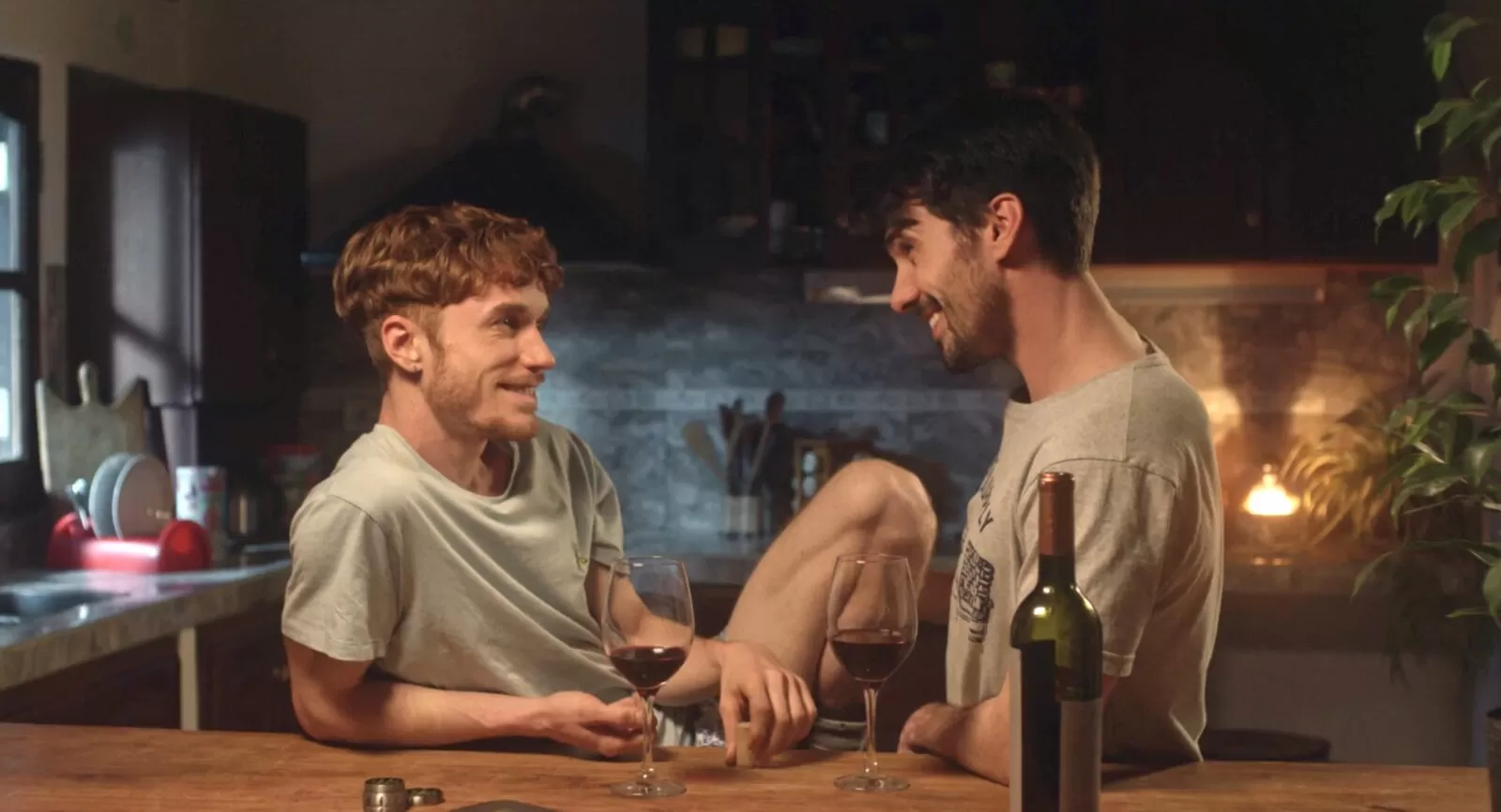
Critique of the film Quelques mots d’amour (Lo que escribimos juntos in VO / What we wrote together for the international title) – A film full of tenderness and sweetness about a gay couple newly settled in the countryside With Quelques mots d’amour, director Nicolás Teté (who directed Des secrets dans le placard) immerses us in the daily life of a loving gay couple who have left the city to try a more peaceful life in a house in the countryside. Summary of the film Quelques mots d’amour Argentina. Juan (Ezequiel Esteban Martinez) and Mariano (Santiago Magariños) have just moved into a house in the countryside. Far from the frenetic pace of the city, they enjoy the joys and calm of daily life in a rural environment. Space for themselves and for an adorable little dog, a garden, no noise. For Juan, who is a writer enjoying a bit of success, it is an opportunity to write while being well focused. And for Mariano, it is the opportunity to indulge his passion for plants and try to make a living from it. When one of their friends, Carla (Nazarena Rozas), comes to visit them for a few days, announcing both that she is pregnant and confessing that her couple life is not idyllic, she will, without realizing it, bring out some buried questions in this solid couple. A gentle and contemplative staging It is a somewhat special film that director Nicolás Teté delivers here. He avoids any major drama and plunges us into a kind of permanent calm. Like the two…
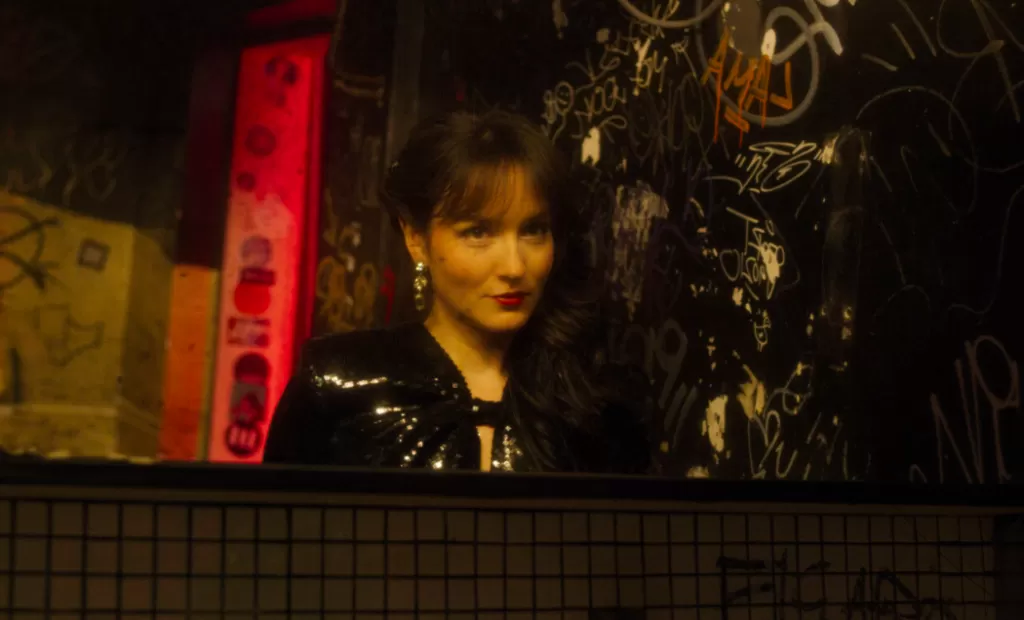
Free adaptation of the short story of the same name by Henry James, La bête dans la jungle is a new delightful OFNI signed Patric Chiha. Anaïs Demoustier and Tom Mercier are formidable in this atmospheric and highly romantic work. 1979. May (Anaïs Demoustier), in her twenties, is a night owl. She loves going to the capital's nightclubs with her trendy friends. As she goes to a new establishment that does not yet have a name, she recognizes John (Tom Mercier), a handsome boy who had deeply marked her ten years earlier. She was then just a teenager and, as one can guess, had fallen under his spell when he revealed to her an enigmatic secret: something, "the thing," would one day happen to her... John does not recognize May and does not really remember this meeting at first. Then the memory vaguely returns. No matter: May and John will become friends, night companions. Obviously, May is in love and hopes that her patience will be rewarded by following John in his bubble. But the mysterious romantic beau will remain unfathomable, asexual. For 25 years, from 1979 to 2004, they will wait for "the thing" to happen, meeting every Saturday night in the same nightclub. Will the long-awaited thing finally happen? Patric Chiha is here faithful to his obsessions and we find in La bête dans la jungle his taste and talent for creating unique atmospheres, plunging us into the heart of the night, of reverie, among moving bodies. This work is definitely divisive, does not and will…
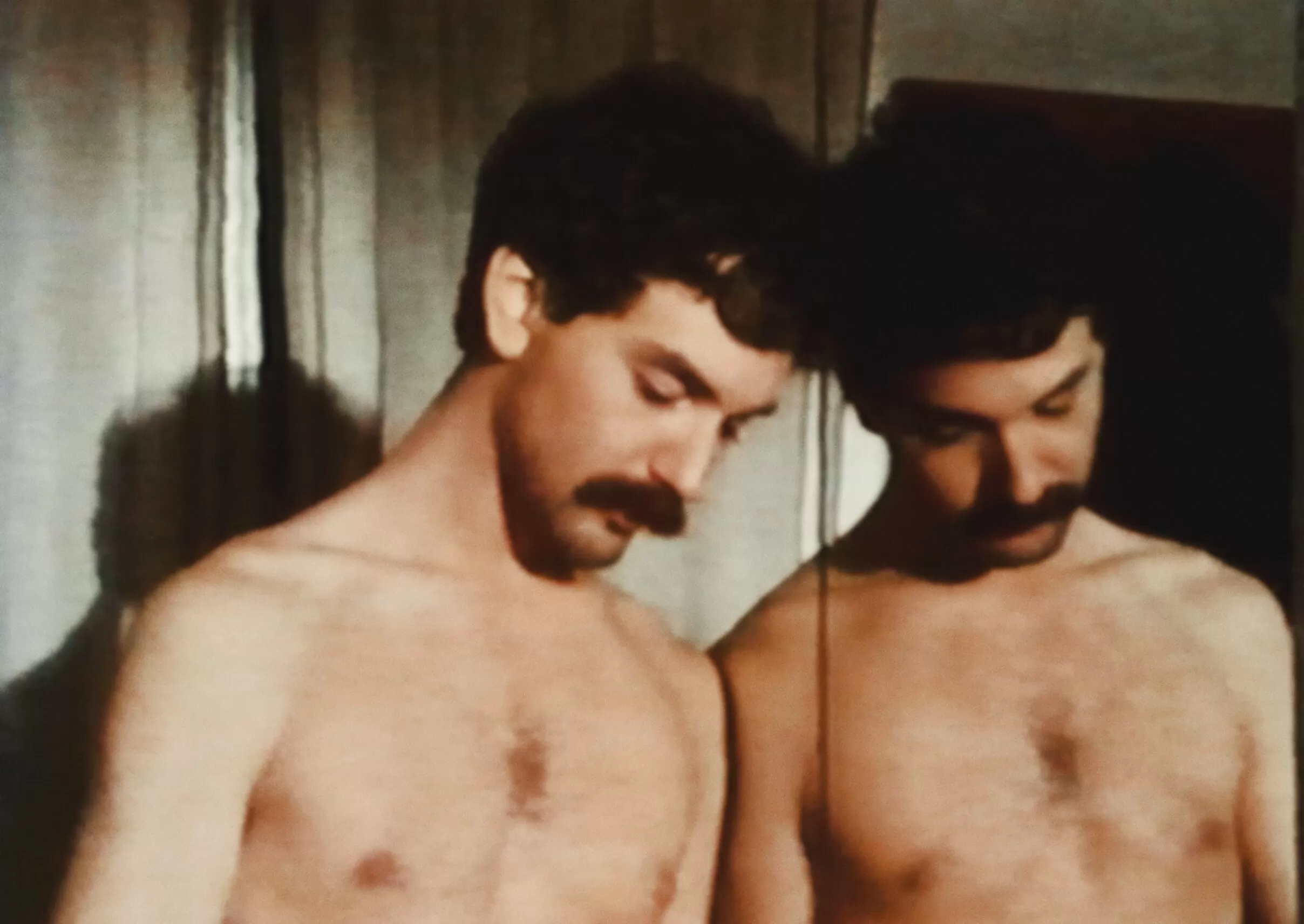
Gay film review 501 by Joe Gage Directed by Joe Gage under the pseudonym Tim Kincaid, 501 is a simple and endearing film that sublimates the handsome mustached Daniel Holt. Labyrinth of desire It is a pink film, meaning it is for adults. The story is both banal and universal: we follow a taxi driver (played by Daniel Holt) who appears to lead a solitary life. We see him wandering alone through several vignettes. We also understand that he is a man who fantasizes a lot, as very well suggested by the opening scene and a sequence where he devours with desire a gay magazine of the time (the mythical magazine Honcho). The encounter that changes everything To escape boredom, our handsome mustache enjoys himself alone or indulges in gay cruising… until, at a party, his gaze meets that of another handsome and virile mustached man played by the very sexy Richard West. The last part of the film is thus dedicated to this encounter that shows the symbiosis between the two men, their coup de coeur, suggesting that a beautiful story between two might begin. After a night of love, the wake-up time shows 5:01 AM, the film’s title is thus a nod to this moment when Daniel Holt’s character understands that he might no longer be alone. A sensitive and romantic vintage film Here we find the charm of vintage films, their unique atmosphere at a time when being an x-rated film did not prevent sensitivity and romance. It is a portrait full of love of Daniel Holt…
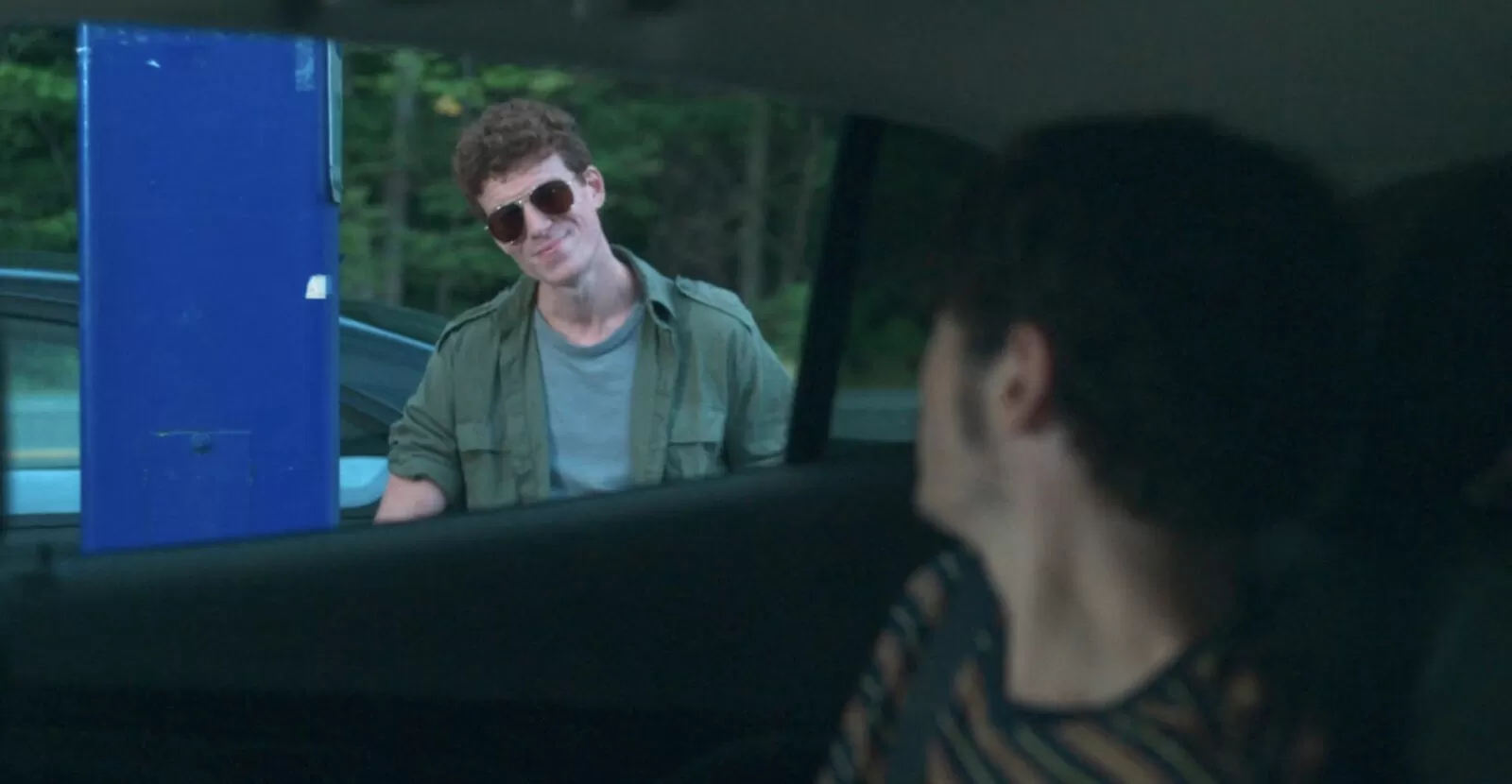
Critique of the gay thriller Autour du lac (Birder in the original version) Critique of the gay thriller Autour du lac (Birder in the original version) by Nate Dushku with the feverish Michael Emery. An independent film that evokes L’inconnu du lac. A dark and singular atmosphere It is a small film obviously made with few resources but which has a very dark and singular atmosphere that makes it leave its mark. Autour du lac is a bit like if L’inconnu du lac was filmed from the point of view of the killer. A potential serial killer The film does not make a mystery: from the start we understand that its main character, Kristian (Michael Emery), an ornithologist who will spend a few days in a naturist camp around an isolated lake in New Hampshire, is twisted. We will finally understand that he is a real potential serial killer and the deaths may accumulate at the camp where he will stay. Eroticism and danger Kristian has understood how to attract his gay prey into his nets: he has built himself a muscular body that he proudly displays, he masters cerebral domination, knows how to play verbally to tease those around him. And more than ever here the little death will be linked to the real death in disturbing scenes that mix furious and gently kinky eroticism and great danger. A singular gay thriller If gay cruising has already inspired the gay thriller genre several times and for once this film by Nate Dushku does not particularly shine by its formal…
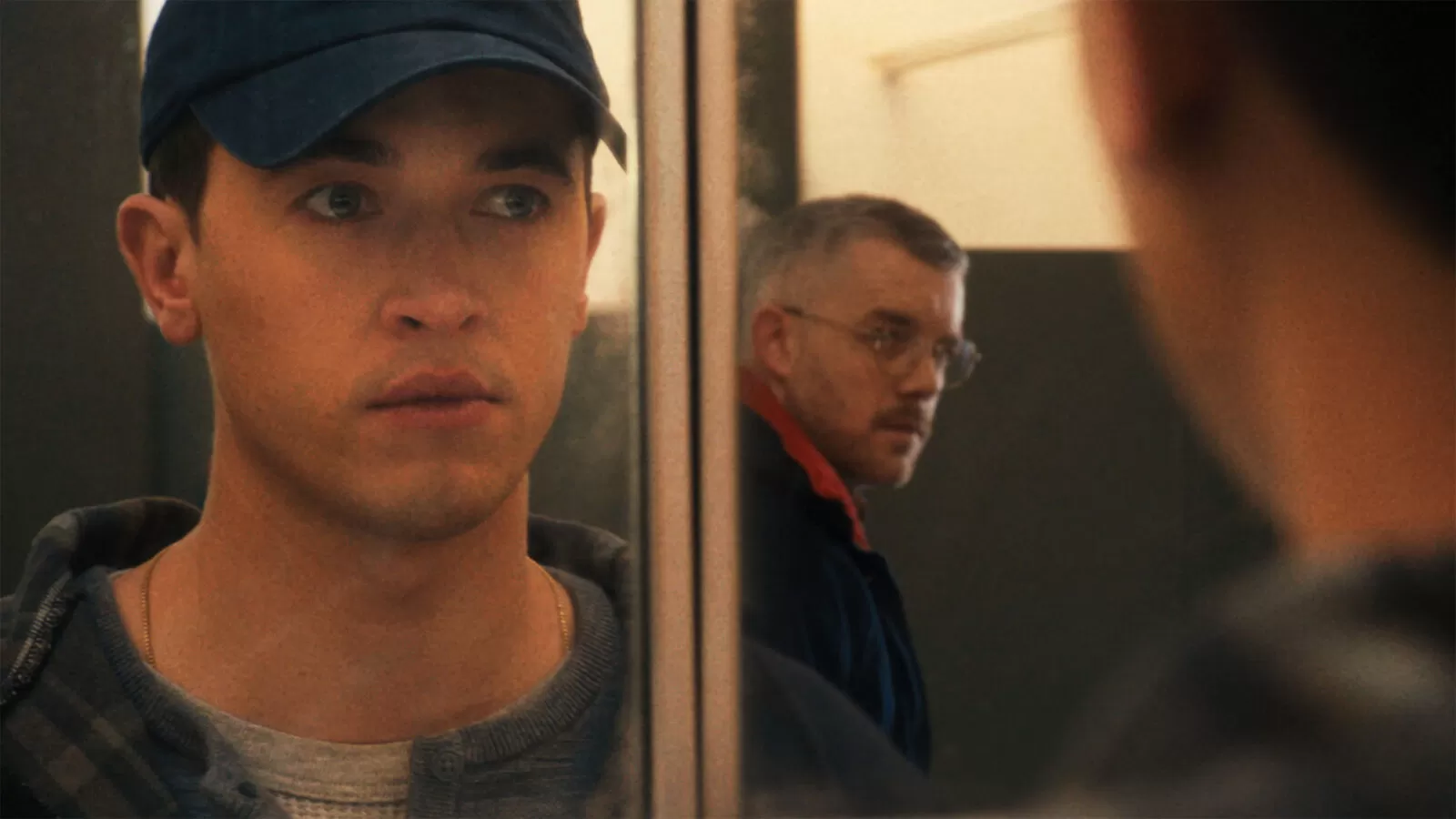
Critique of the film Plainclothes by Carmen Emmi with Russell Tovey and Tom Blyth. A sensory gay thriller that does not leave one indifferent. A striking first feature film The director Carmen Emmi hits hard for his first feature film PLAINCLOTHES (title that refers to plain clothes, when police officers do not wear their uniforms). And offers Russell Tovey his best role in a cinema film. Courtesy of Sundance Institute | photo by Ethan Palmer A gay policeman in the closet in the 1990s The plot takes place in the late 1990s in the United States (in Syracuse) and follows the character of Lucas (Tom Blyth, excellent), a young cop who evolves in a male-dominated environment. Recruits are pushed to toughen up, build muscle, and toxic masculinity is clearly established as the norm. Certain cops are also pushed above all to conduct operations in shopping malls where it is about trapping homosexuals meeting in toilets to have fun discreetly. Police officers are thus tasked with seducing gays in the toilets and once their prey begins to initiate a beginning of an encounter, they arrest them. Lucas, because of his youth and charm, is chosen as bait. His colleagues do not know that for a good while, the young man has been repressing his homosexuality… The encounter with Andrew Until now, Lucas has always reluctantly accepted to engage in this sordid racket, things are about to change when he finds himself wanting to trap Andrew (Russell Tovey), a very charming daddy with glasses. Unlike the other men he had faced in…
